Percussion massage
Percussion massage is an advanced bodywork technique designed to support muscle relaxation, circulation, and overall tissue health. Increasingly used in rehabilitation, sports recovery, and therapeutic settings, this method provides deep mechanical stimulation to muscles and fascia through rapid, rhythmic pulsations. As a result, it has become a popular complementary approach in manual therapy and modern osteopathic care.
What Is Percussion Massage?
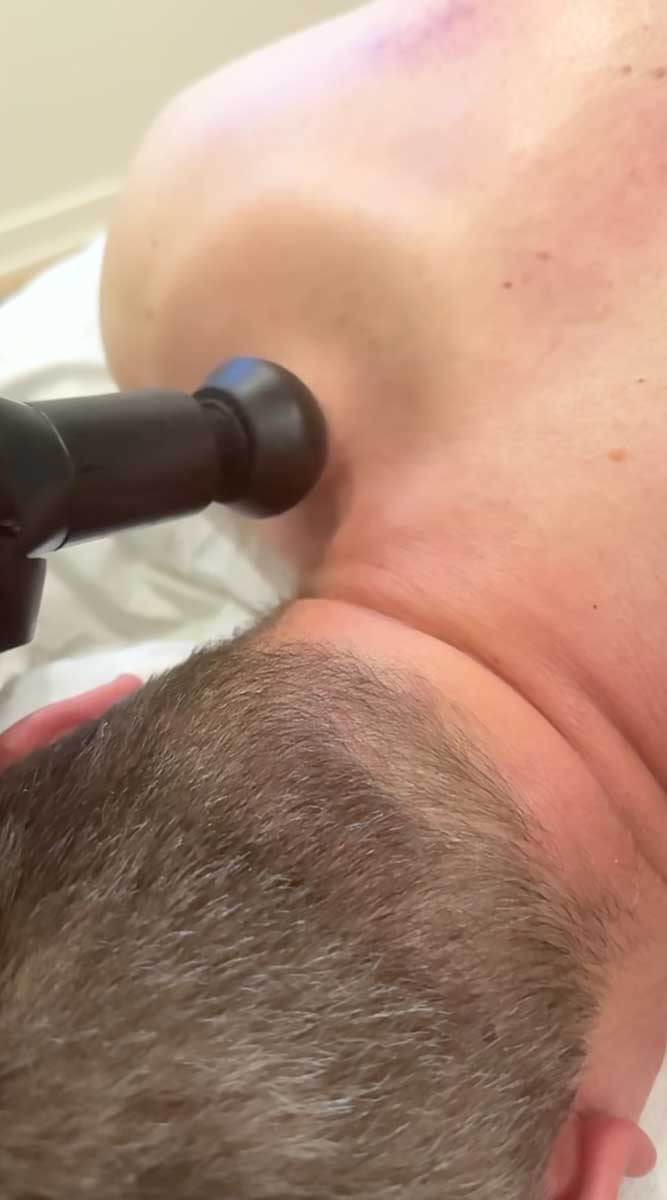
Percussion massage is a form of deep tissue stimulation that uses fast, repetitive pulses—typically between 30 and 55 strokes per second—applied either manually or with a specialized vibrating massage gun. Unlike traditional massage, which relies on slow, gliding movements, percussion therapy delivers short, targeted impulses directly into muscle tissue.
Because of this rapid stimulation, percussion massage penetrates deeper layers of muscle and fascia without requiring sustained pressure. Consequently, it can be both effective and time-efficient, especially for areas with chronic tightness or reduced mobility.
How Percussion Massage Works
At a physiological level, percussion massage works by repeatedly stimulating muscle fibers and connective tissue. This rhythmic input encourages muscles to relax while also increasing local blood flow. In addition, the pulsating motion helps reduce neuromuscular tension by interrupting pain signals and calming overactive muscle responses.
Moreover, the mechanical vibration supports lymphatic drainage, which assists the body in clearing metabolic waste. As circulation improves, oxygen and nutrients are delivered more efficiently to the tissues. Over time, this process supports tissue recovery, flexibility, and overall muscular performance.
Key Benefits of Percussion Massage
Muscle Relaxation and Tension Release
First and foremost, percussion massage is highly effective at relaxing tight or overworked muscles. By delivering rapid pulses into the tissue, it helps muscles release involuntary guarding and chronic tension. This is particularly beneficial for individuals experiencing stiffness due to prolonged sitting, repetitive movements, or physical overuse.
Trigger Point Relief
In addition, percussion massage can help deactivate myofascial trigger points, which are localized areas of muscle tightness that often refer pain elsewhere in the body. Because the technique targets deep tissue layers, it can reduce sensitivity and restore normal muscle function more quickly than surface-level techniques alone.
Improved Blood and Lymph Circulation
Another important benefit is improved circulation. Percussion massage stimulates both blood and lymph flow, which supports faster removal of metabolic byproducts such as lactic acid. Consequently, muscles may recover more efficiently after physical activity or strain.
Enhanced Mobility and Fascial Flexibility
Furthermore, by working on the fascia—the connective tissue surrounding muscles—percussion massage helps improve tissue elasticity. As a result, joint movement may feel smoother, and overall range of motion can increase, especially when combined with stretching or manual therapy.
Support for Respiratory Conditions
Interestingly, percussion techniques have also been used in respiratory care. When applied appropriately, rhythmic tapping can help loosen mucus in the lungs, supporting airway clearance in certain pulmonary conditions. For this reason, percussion methods have long been part of chest physiotherapy protocols.
Percussion Massage in Rehabilitation and Therapy
In a clinical or rehabilitative setting, Vibromassage is often used as part of a broader treatment plan. For example, it may be combined with manual osteopathy, soft tissue manipulation, or corrective exercises. By preparing tissues before hands-on work, percussion therapy can make subsequent treatments more effective and comfortable.
Similarly, during recovery phases, Vibromassage can help reduce muscle soreness, support tissue healing, and improve functional movement. Therefore, it is commonly used for sports injuries, workplace strain, and postural imbalances.
Manual vs. Device-Assisted Percussion Massage
Vibromassage can be delivered either manually or with a vibrating massage gun. Manual application allows for greater sensitivity and adaptation to the individual’s response. On the other hand, device-assisted percussion provides consistent frequency and depth, which can be useful for larger muscle groups.
Importantly, proper technique and appropriate intensity are essential. Excessive force or incorrect application can irritate tissues rather than support recovery. For this reason, percussion massage is most effective when guided by a trained practitioner who understands anatomy, biomechanics, and individual tolerance.
Who Can Benefit from Percussion Massage?
- Vibromassage may be beneficial for:
- Individuals with muscle tightness or stiffness
- Athletes seeking faster recovery
- People with sedentary or physically demanding jobs
- Patients in rehabilitation programs
- Individuals experiencing postural or movement-related discomfort
However, as with any therapeutic approach, it may not be suitable for everyone. Certain medical conditions, acute injuries, or sensitivities may require modification or avoidance of percussion techniques.
Schedule your massage session and support your recovery and mobility.